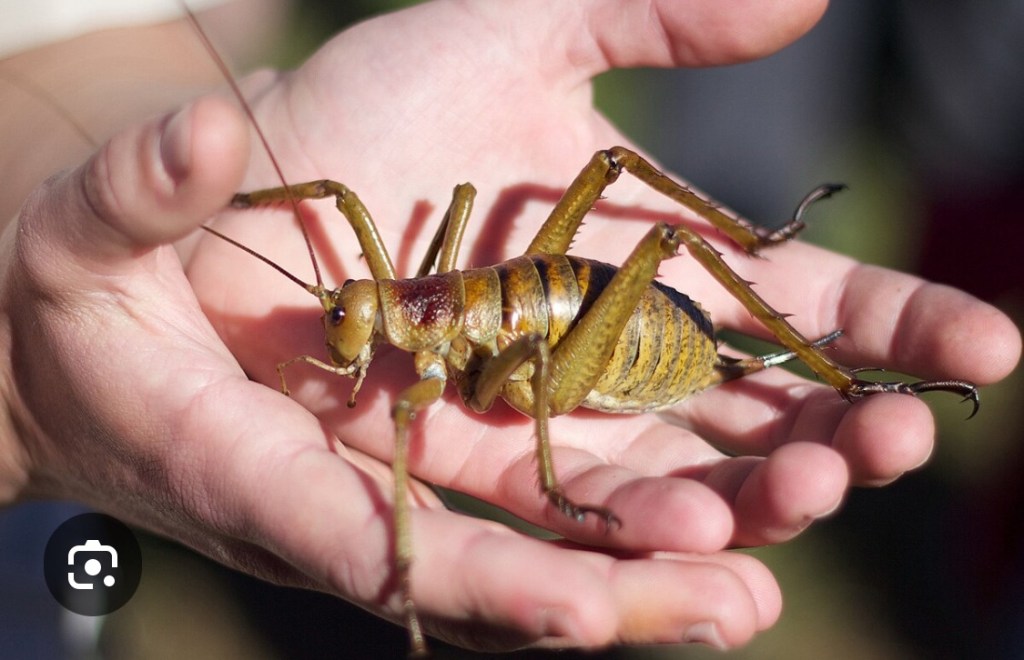
Beneath the cover of night, a giant wētā stirs. It moves carefully, its spiny legs brushing against damp leaves as it emerges from the safety of a hollow, moldy tree trunk. In the darkness, its body gleams like an armored tank, its long antennae twitching ahead, sensing the world before it.
This is its time—the cool, damp night when shadows stretch long and the forest hums with unseen life. The air is thick, filled with the scent of moss and rotting wood. Most insects would shy away from such a place, but for the wētā, it is home.
But home does not mean safety.
The wētā pauses, its long legs trembling. It knows the dangers that lurk in the night. Slow and erratic, it is an easy target for hungry eyes. And right now, in the branches above, a predator is watching.
A kingfisher.
Sharp-eyed and patient, the bird tilts its head, gauging the wētā’s movements. Its beak—long and strong—could snap the wētā up in an instant. But the kingfisher has learned a trick. Instead of eating its prey right away, it will take the wētā high into the air and drop it onto the hard earth below, shattering its armor before feasting.
The wētā senses something is wrong. Instinct kicks in, and it freezes, trying to blend into the undergrowth. Will it go unnoticed? Or will the kingfisher strike?
The night is long, and survival is never guaranteed.
 Animalstories