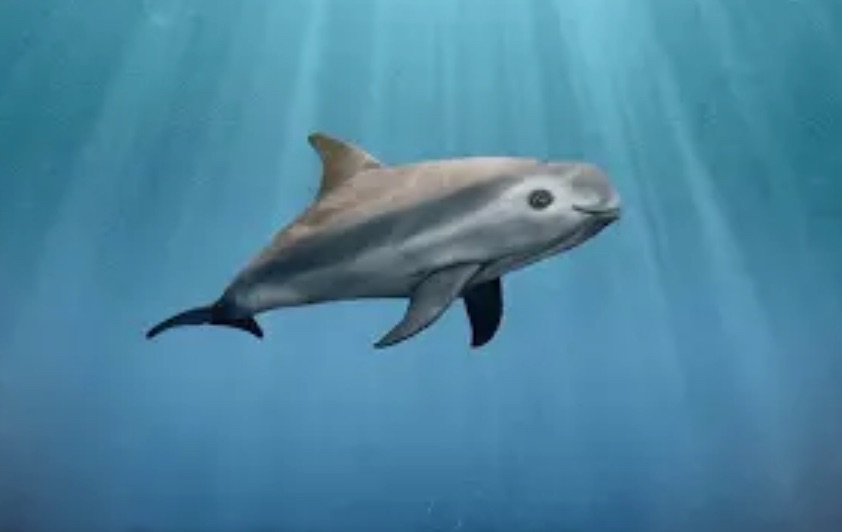
Deep in the warm, turquoise waters of the northern Gulf of California, a small, shy creature glided silently beneath the waves. Her name was Nala, a young vaquita porpoise—the rarest marine mammal in the world.
Nala lived in a world of gentle currents and golden sunlight that danced on the surface. She spent her days exploring the shallow waters, searching for fish and squid, using her echolocation to sense the tiniest movements in the sea. Her home was a hidden paradise, a place where only a few of her kind remained.
But Nala wasn’t alone. Her mother, Luma, swam beside her, guiding her through the maze of sandbanks and seagrass. “Stay close,” Luma always reminded her. “There are dangers here.”
Nala was curious about everything. She loved chasing schools of silvery fish and playing among the swaying tendrils of kelp. But she also noticed something strange—floating shadows in the water, large nets drifting silently, waiting like invisible traps. Her mother had warned her about them. “These nets don’t let go,” Luma had said, her voice heavy with sorrow.
One day, while exploring a rocky cove, Nala heard a distant cry. It was another vaquita, trapped in a net! Without thinking, Nala darted through the water, calling out in reassurance. She and her mother worked together, nudging and pushing at the tangled ropes. It took all their strength, but at last, the trapped vaquita broke free and swam away into the safety of the open sea.
As they rested in the gentle current, Luma looked at Nala with pride. “You are brave,” she said. “And we must keep being brave—for each other, for our home.”
That night, as the moon cast silver ripples over the Gulf of California, Nala knew she had a purpose—to protect her home, to keep her family safe, and to ensure that the vaquitas, no matter how few, would never be forgotten.
And so, in the quiet waters of the northern sea, the rare and beautiful vaquitas swam on, unseen by most but vital to the ocean’s story.
 Animalstories